

Chern
Co-Founder | Craftworker: Wood | Executive Director
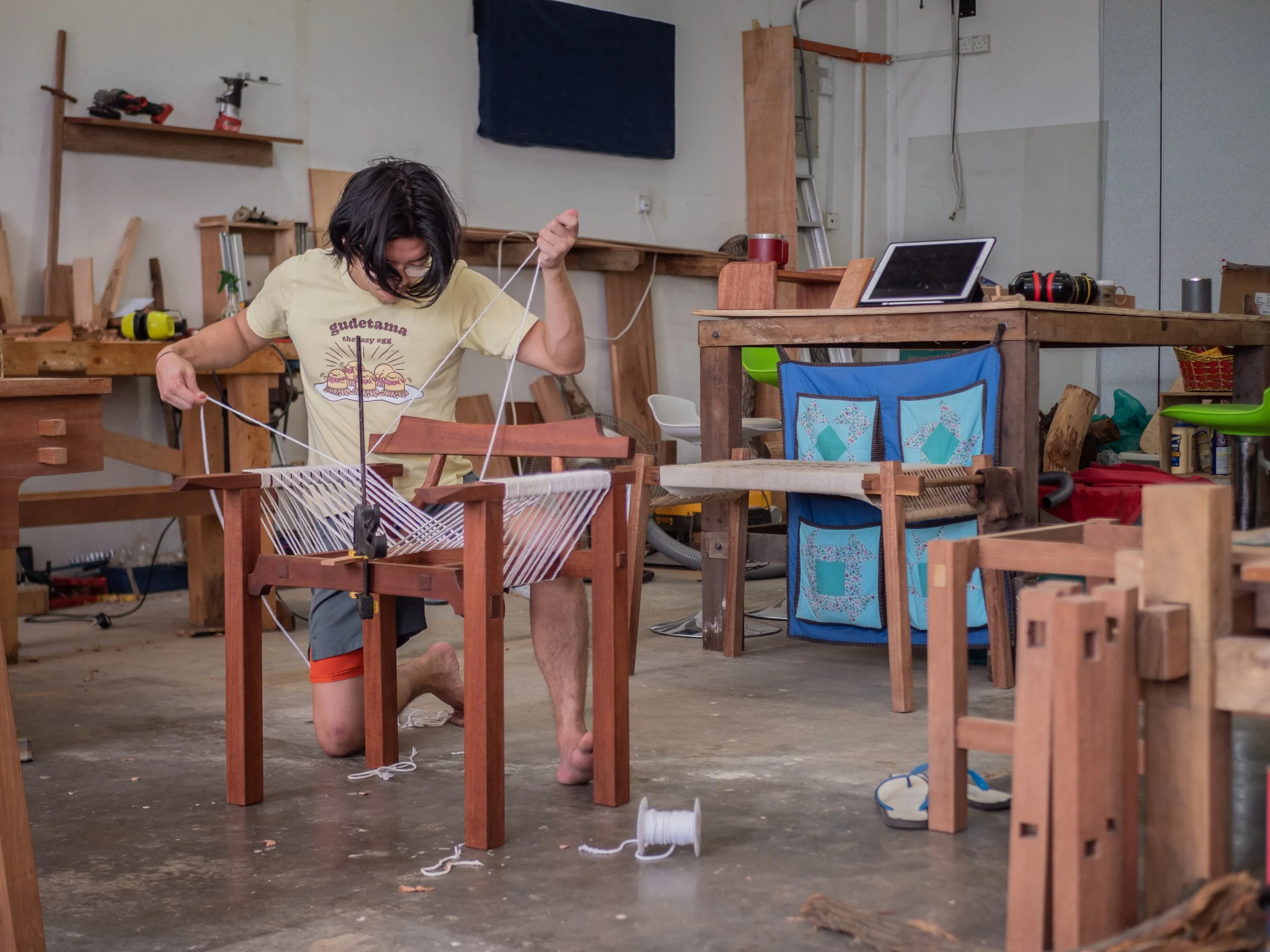
Teoh Jia Chern
Teoh Jia Chern studied Anthropology at Swarthmore College and University of Oxford. His professional works span published writings by Khazanah Research Institute and UNU-WIDER, furniture and ceramics featured by the Malaysian Institute of Architects and the Edge, as well as social programs funded by CIMB Foundation and UNDP. He is a recognised craftperson by the Malaysian Handicraft Development Corporation.
“You want to know what I do. I make.
I want to know “what does making do?” What novel relationships can we generate through making differently.
Making can be thought of as an arrangement of material. Well, humans are material too. There are good arrangements that bring good relations and bad arrangements that bring bad relations.
It is clear that our methods of production — let’s say in iPhones, t-shirts, and even consultant slide decks — often do not produce good relations; sometimes in the interpersonal sense between colleagues or with bosses, but importantly also in the economic sense. The fruits of labour are not fairly distributed.
All this is to say: what if we arranged how we make things and how we make humans differently?”
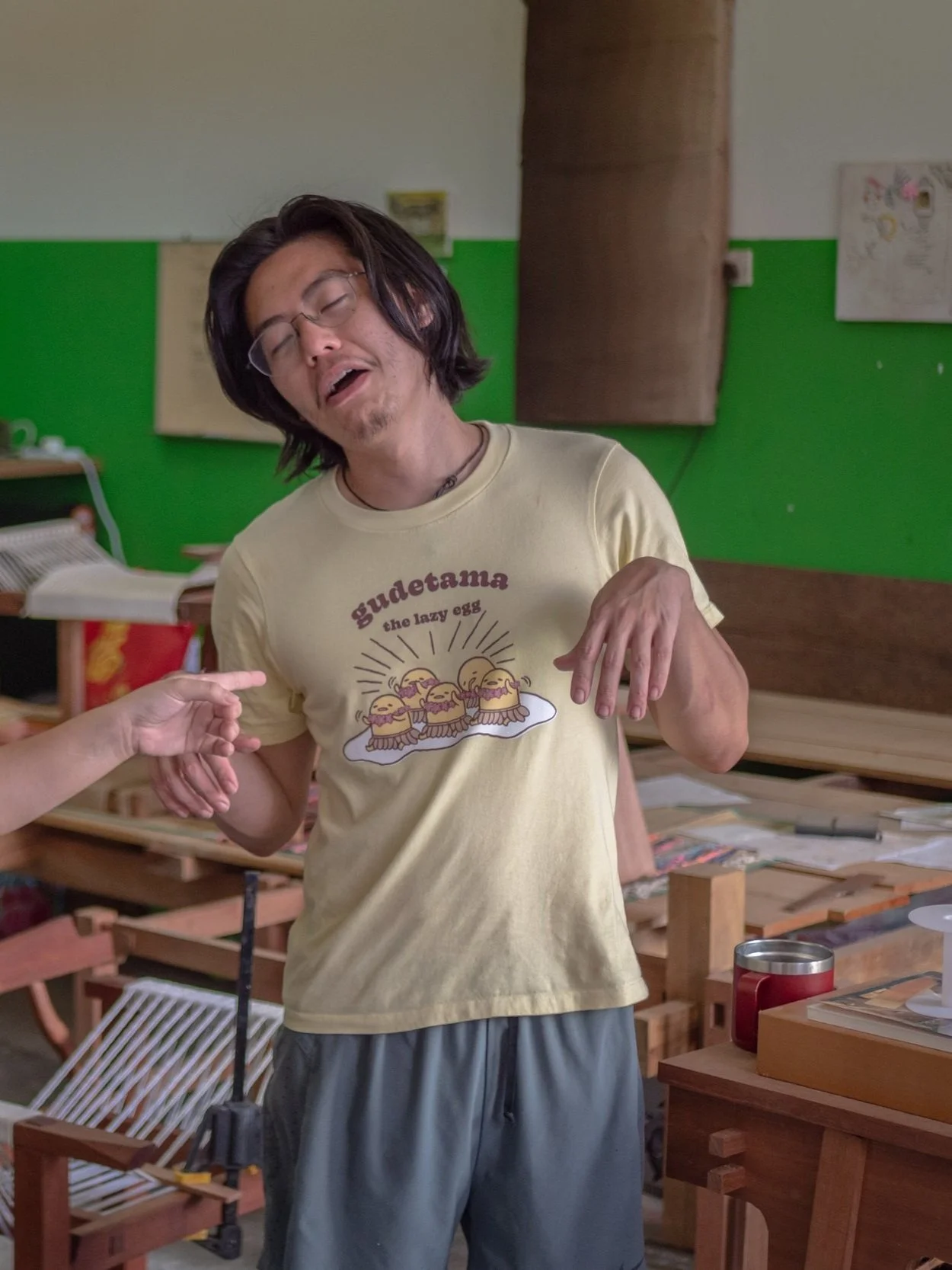
Process: Making-do
How do I make? I make-do.
Making-do begins with what is in front of us. It leans into the tendencies of what is given. This requires removing self and accepting another.
Wood as a material has physical tendencies. It is tough. It transfers load along grain. It warps, it cups, it twists, and it breathes. In an out. Moisture moves, expands, then counteracts attempts to fix it into position.
Much of modern processes with wood is about dominating these tendencies into submission. Sawn into regular planks, square-edged, planed flat, kiln dried, treated etc. This is less about human dominance than perhaps about the demands of utilising large scale machining. For modernist machines to execute accurately, the inputs of wood must be modular. Humans, like wood, are shaped by such machine designs, who act like guide rails limiting how humans perceive, prepare, and construct with wood.
But I am a different sort of machine. And I try to acknowledge and accept the tendencies of wood, meaning we must change the way we work with it and each other. So I complement my work with different sorts of machines: chisels, handplanes, and handsaws. They are portable, flexible, sensitive. They can work with irregular, wet, warped woods. This expands the limits of design and construction: joints that tension by warp; mortises that tighten as wood dries; components that follow natural curves, allowing for thinner, lighter, and stronger construction.
The same applies to our current political economy. Making-do is about accepting what is given. Putting aside fantasies of utopia, and seeking to salvage the unexpected.